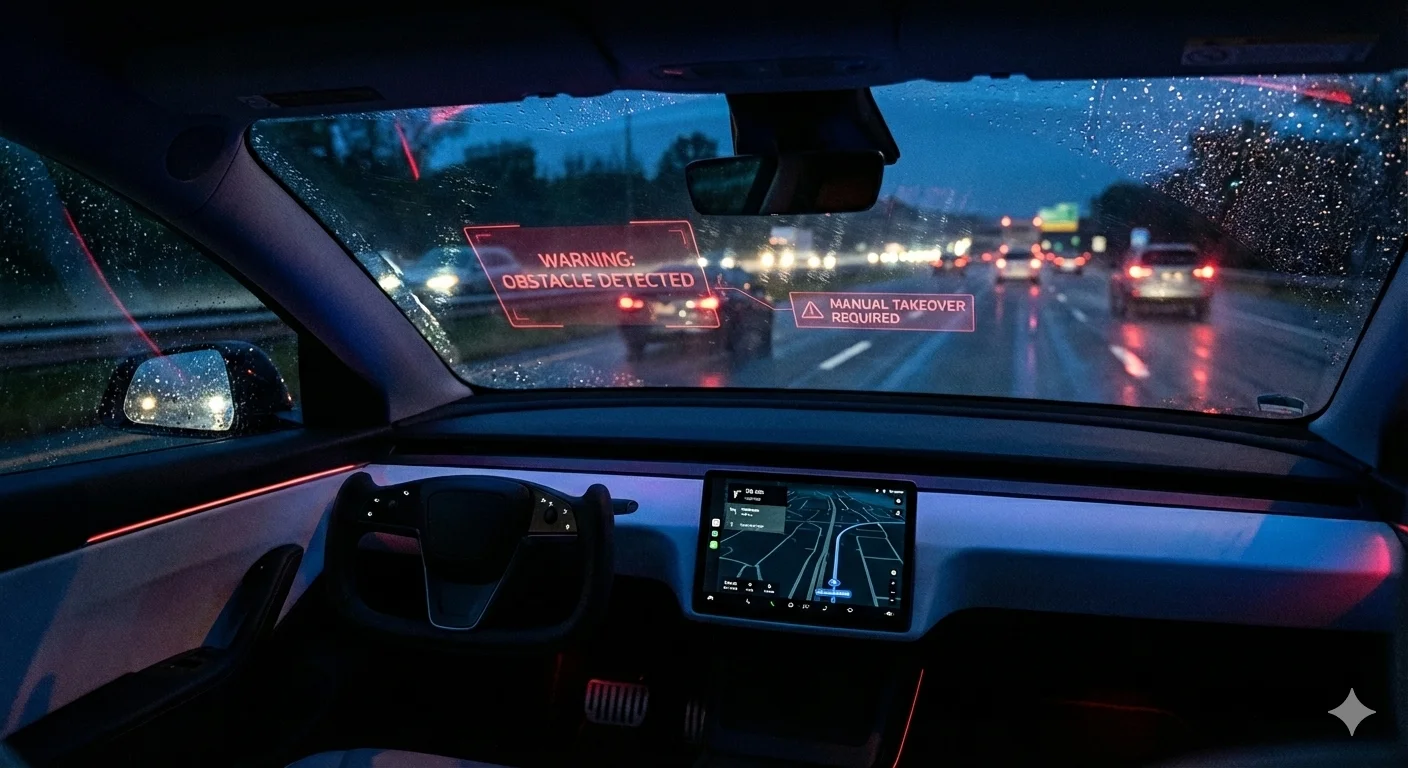
AV verification in rain

AUTONOMOUS VERIFICATION

The AV Safety Layer
That Doesn't Guess.

Your navigation stack generates a decision. You send us that decision and the raw sensor context. Our proprietary, patent-pending verification architecture checks both — independently, against physics, law, and safety standards — and returns a verdict before the actuator acts. Not your model's interpretation of the world. The data itself. Sub-millisecond. Cryptographically signed. No shared state with your stack, no shared failure modes.

sub-1msBefore actuation
<1cmVehicle travel at 65mph during verification
Scalable scenarios
100%Deterministic
THE PROBLEM

Why Your Stack Needs
an Independent Lock.

Your navigation stack is extraordinary. Modern safety frameworks formalize following distance, lateral safety, and crash avoidance at the chip level. Your planner executes them well. But every stack shares the same structural limitation it cannot resolve from the inside:

"A safety layer built into the stack cannot independently verify the stack."

Those frameworks cover what they were designed to cover. They don't model road surface physics — the difference between ice at 20mph safe and 65mph fatal. They don't apply the federal emergency vehicle yield mandate across all 50 states. They don't catch the split-Mu spin-out when left wheels hit gravel and right wheels hit asphalt. These aren't gaps in your engineers' work. They're categories that require a fundamentally different system: proprietary, purpose-built, and running entirely outside your stack — with no shared state and no shared failure modes.

PrimeVitas is that system. One API call. No changes to your model. No changes to your planner. Every decision — regardless of what framework generated it — independently verified before the wheel turns.

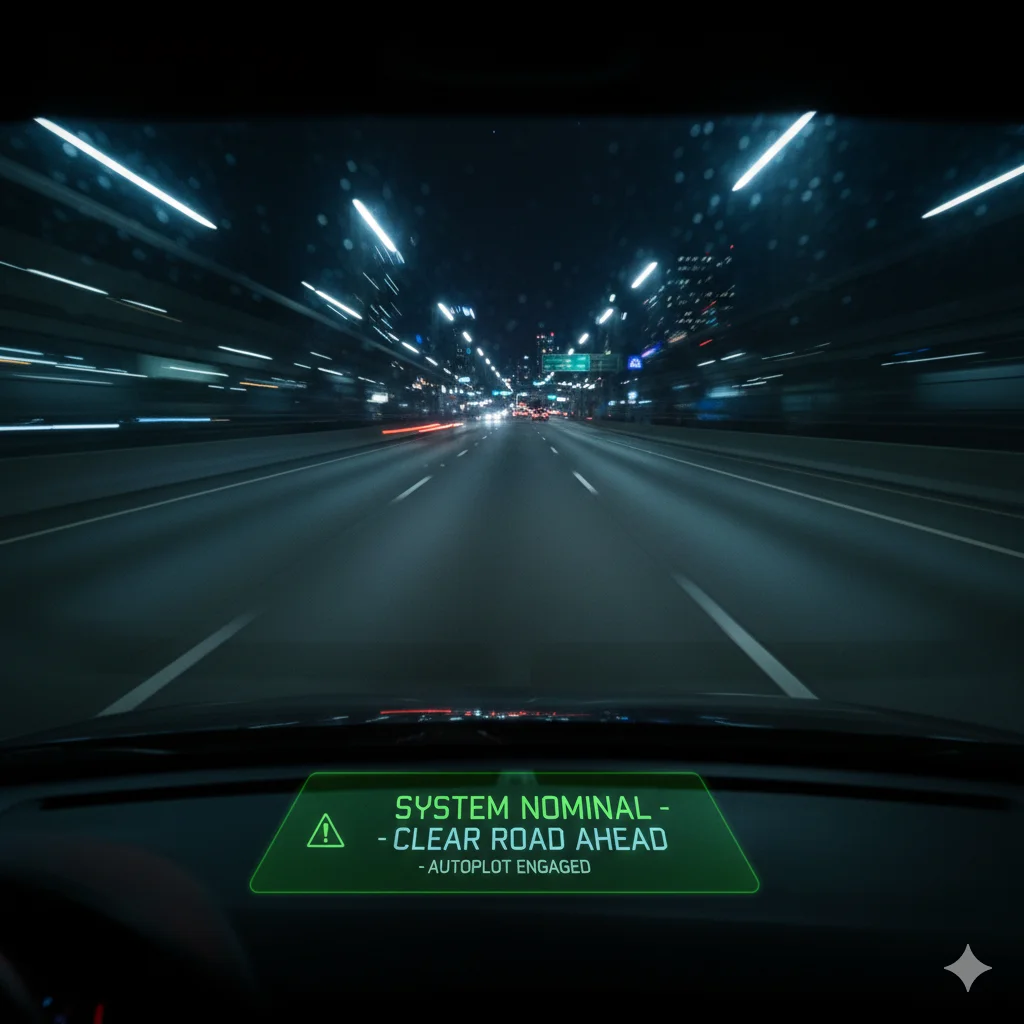
Clear road verified PASS
✓ PASS sub-1ms · audit signed

When everything checks out — physics, law, sensor data, safety standards — the decision passes through sub-millisecond with a full cryptographic audit trail. No delay. No friction. Just certainty.

SPEED

Fast Enough to
Intercept. Not React.

At highway speeds, the distance your vehicle travels while a safety check processes is the difference between a veto and a crash. We operate before actuation — not as a post-event check, but as the gate the decision must pass through.

Human safety driver 150–300ms
5–9 meters traveled
Traditional safety monitors 50–100ms
1.5–3 meters traveled
LLM safety layer 500ms+
15m+ — far too late
PrimeVitas AI sub-1ms
<1cm — before actuation

Our patent-pending architecture sits between your navigation model and the actuator — verifying every decision sub-millisecond, before the wheel turns. 500× faster than any LLM-based safety approach. Not a reaction. An intercept.

THE SCENARIOS

Six Conditions No Stack
Can Self-Verify.

These aren't edge cases. They're structural gaps in every navigation stack — scenarios where the decision looks valid from the inside, and only an independent external layer catches the violation.

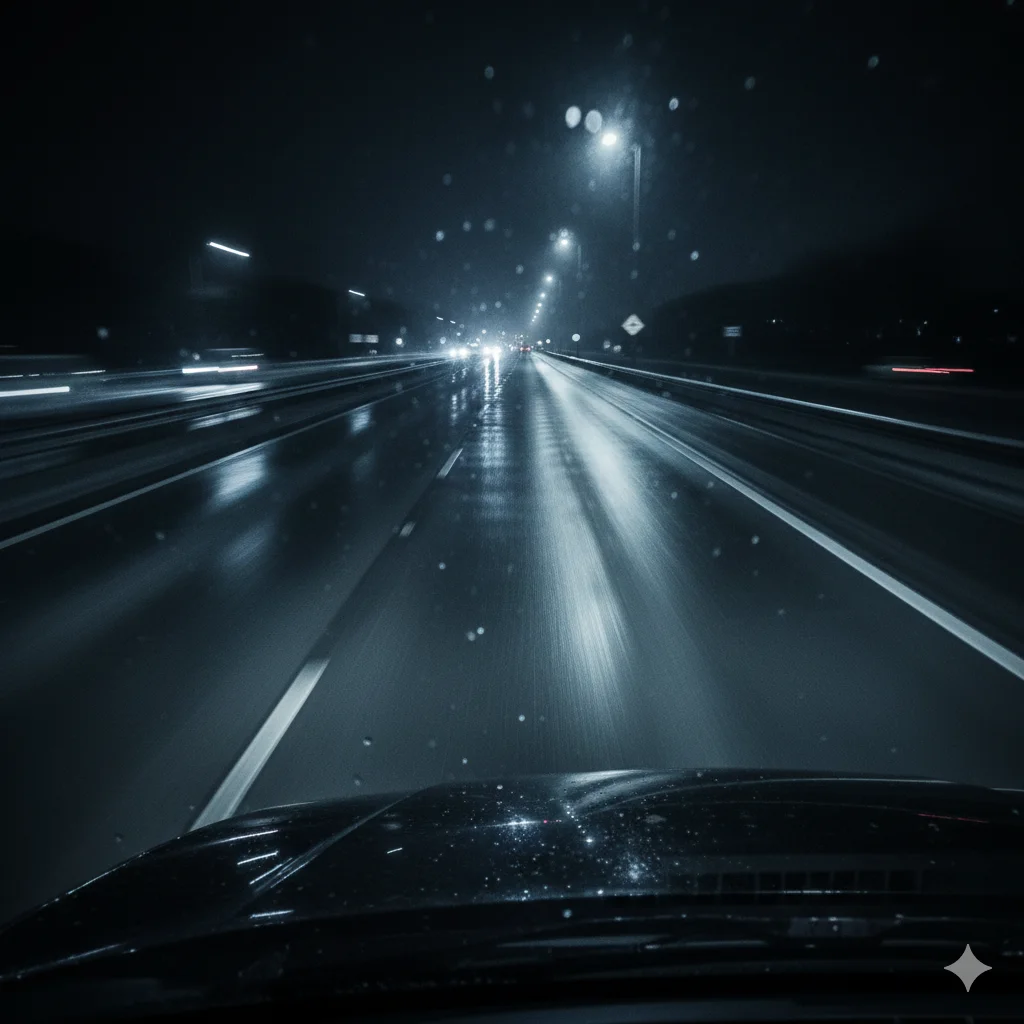
Black ice highway night
BLACK ICE · -8°C · HIGHWAY 75
⚠ DANGER INTERCEPTED

AV Decision: Maintain 65mph

Road surface sensors detected ICE. Physics maximum safe speed on ice: 20mph. The vehicle was operating at 65mph — 45mph over the safe limit for that surface. The navigation model had no road surface physics model. It was reading map speed limits, not ground conditions. PrimeVitas road surface verification fired independently, computed the physics, and issued a VETO before the next actuator cycle.

VETO Road surface check · ICE detected · physics max 20mph · action denied
Intercepted in sub-1ms · Audit trail generated
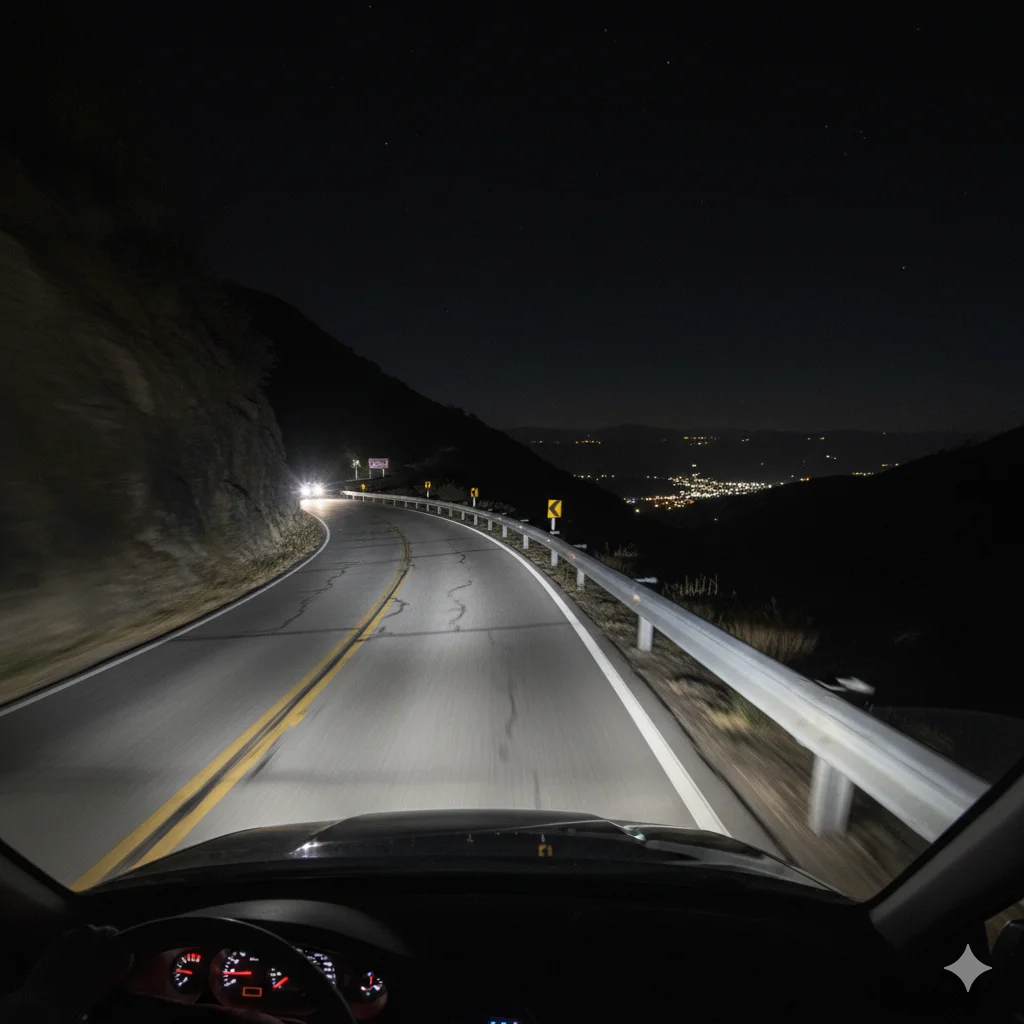
Steep mountain grade at night
MOUNTAIN GRADE · 27° SLOPE
🚨 CRITICAL INTERCEPTED

AV Decision: Accelerate Uphill

IMU sensors reported shoulder roll at 27 degrees. The physics rollover limit for that vehicle class: 25 degrees. The vehicle was already past safe operation — and the model decided to accelerate. PrimeVitas dynamic slope verification computed rollover risk in real time from IMU data, determined the action would cause rollover, and issued a hard VETO. The model had no rollover physics model built in. We didn't need one from the model — we had the math.

VETO Dynamic slope · 27° exceeds 25° rollover limit · emergency stop required
Intercepted in sub-1ms · Audit trail generated
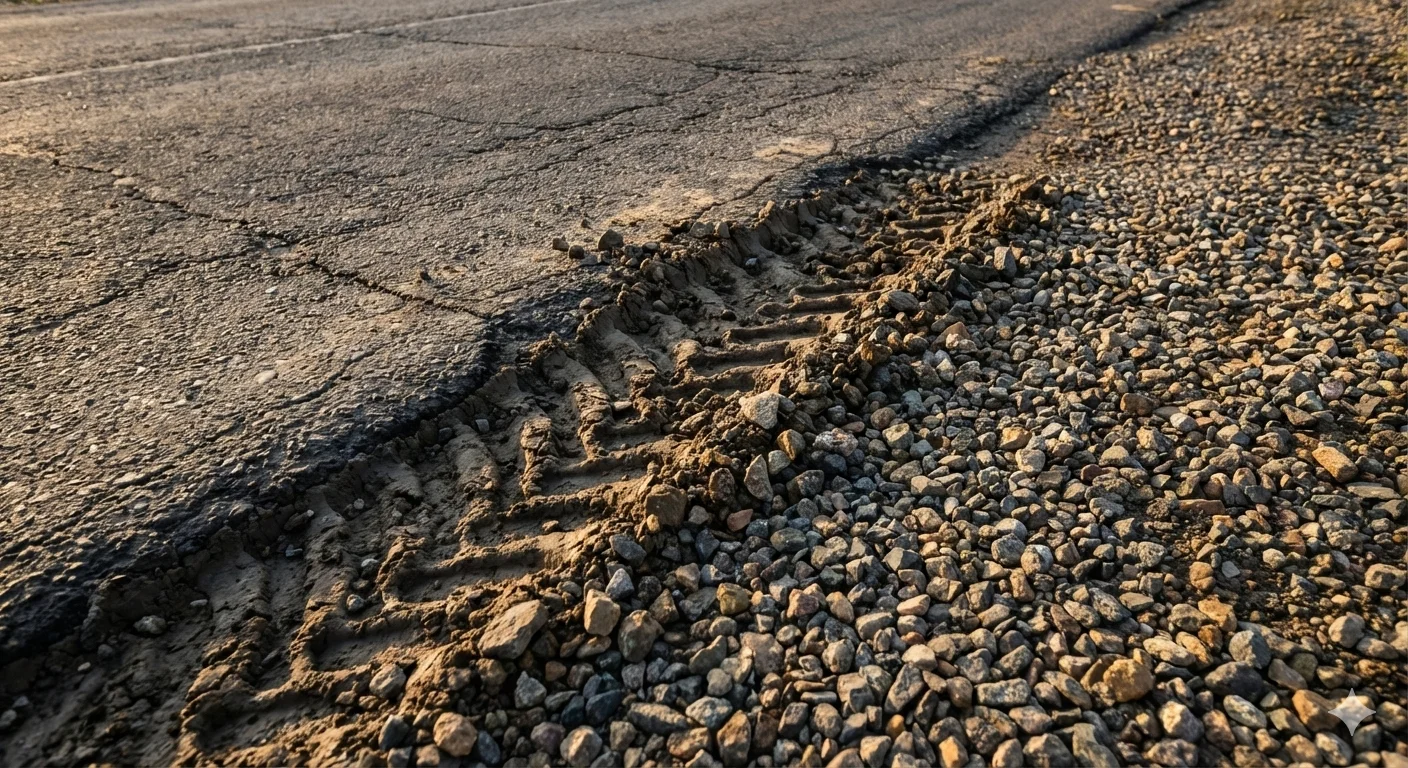
Asphalt to gravel split surface
SPLIT-MU · ASPHALT + GRAVEL · HIGHWAY EXIT
⚠ DANGER INTERCEPTED

AV Decision: Brake Hard

Wheel surface sensors reported differential surfaces: left wheels on asphalt, right wheels on gravel. This is a split-Mu condition — different traction coefficients on each axle. Any braking or throttle input on split surfaces creates differential wheel torque, which causes immediate spin-out. The model initiated hard braking. It had no representation for split-Mu physics. PrimeVitas transition stability check detected the wheel surface mismatch, computed the spin-out risk, and overrode the braking input. The required action: coast with zero torque until all wheels reach uniform surface.

VETO Split-Mu stability · asphalt+gravel · zero torque required · must coast
Intercepted in sub-1ms · Audit trail generated
Pedestrians crossing in rain at night
URBAN INTERSECTION · 3 PEDESTRIANS IN CROSSWALK
🚨 CRITICAL INTERCEPTED

AV Decision: Proceed Through Intersection

Sensor fusion confirmed three pedestrians actively crossing the marked crosswalk. The navigation model processed the scene and generated a "proceed" decision — its trajectory math calculated the timing would work. PrimeVitas pedestrian verification doesn't do trajectory math. It applies a deterministic rule: pedestrians present in crosswalk + any forward action = VETO. No probability. No timing calculation. No confidence range. The crosswalk is occupied. The vehicle does not proceed. Full stop.

VETO Pedestrian check · 3 confirmed in crosswalk · forward action denied
Intercepted in sub-1ms · Audit trail generated
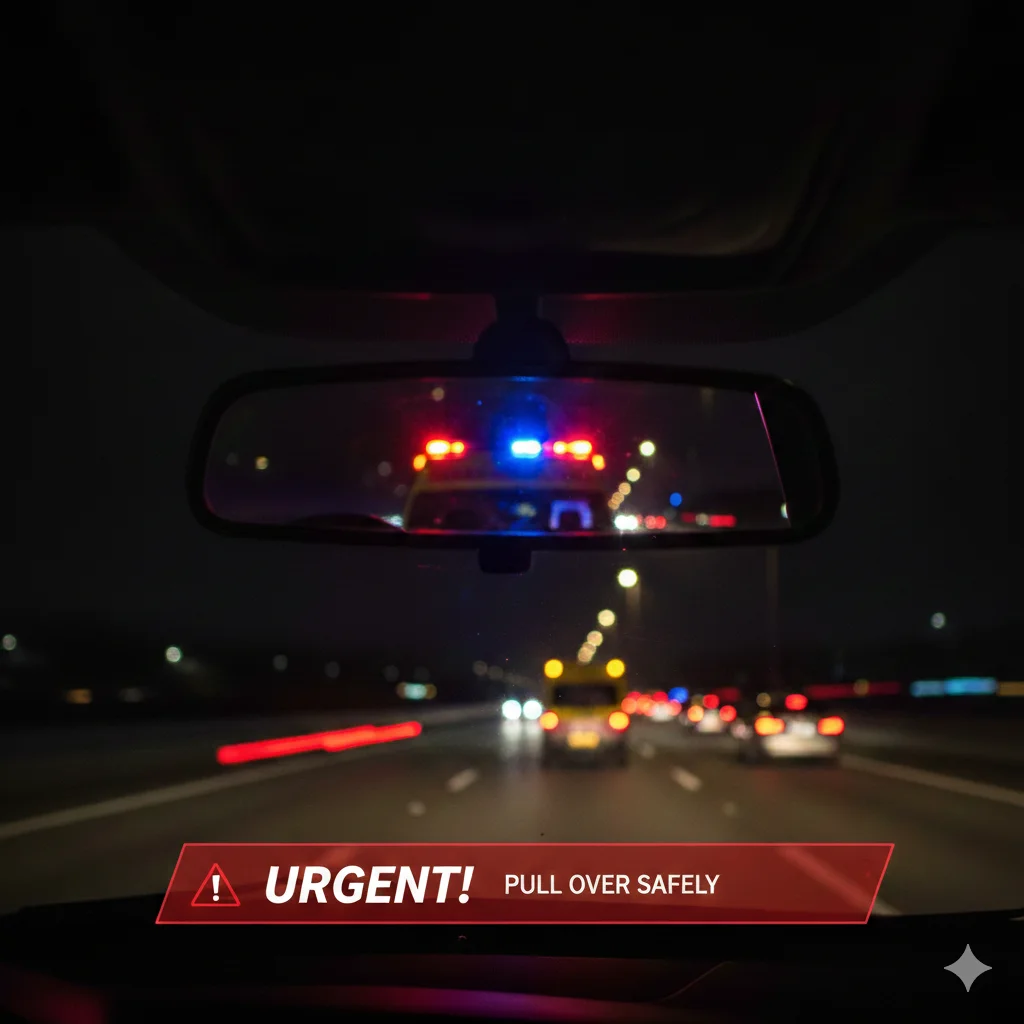
Emergency vehicle in rearview mirror
AMBULANCE 35m · LIGHTS ACTIVE · APPROACHING
⚠ DANGER INTERCEPTED

AV Decision: Maintain Speed

An ambulance with active emergency lights was 35 meters behind the vehicle and closing. Federal law in all 50 states requires drivers to yield immediately — slow down and move to the right. The navigation model registered the ambulance as a vehicle with high approach velocity and adjusted its trajectory accordingly. It did not classify it as an emergency requiring yield. PrimeVitas emergency vehicle verification checks classification independently and applies the federal yield mandate — regardless of the model's classification. VETO: slow down and pull right.

VETO Emergency vehicle · approaching 35m · federal yield mandate · must pull over
Intercepted in sub-1ms · Audit trail generated
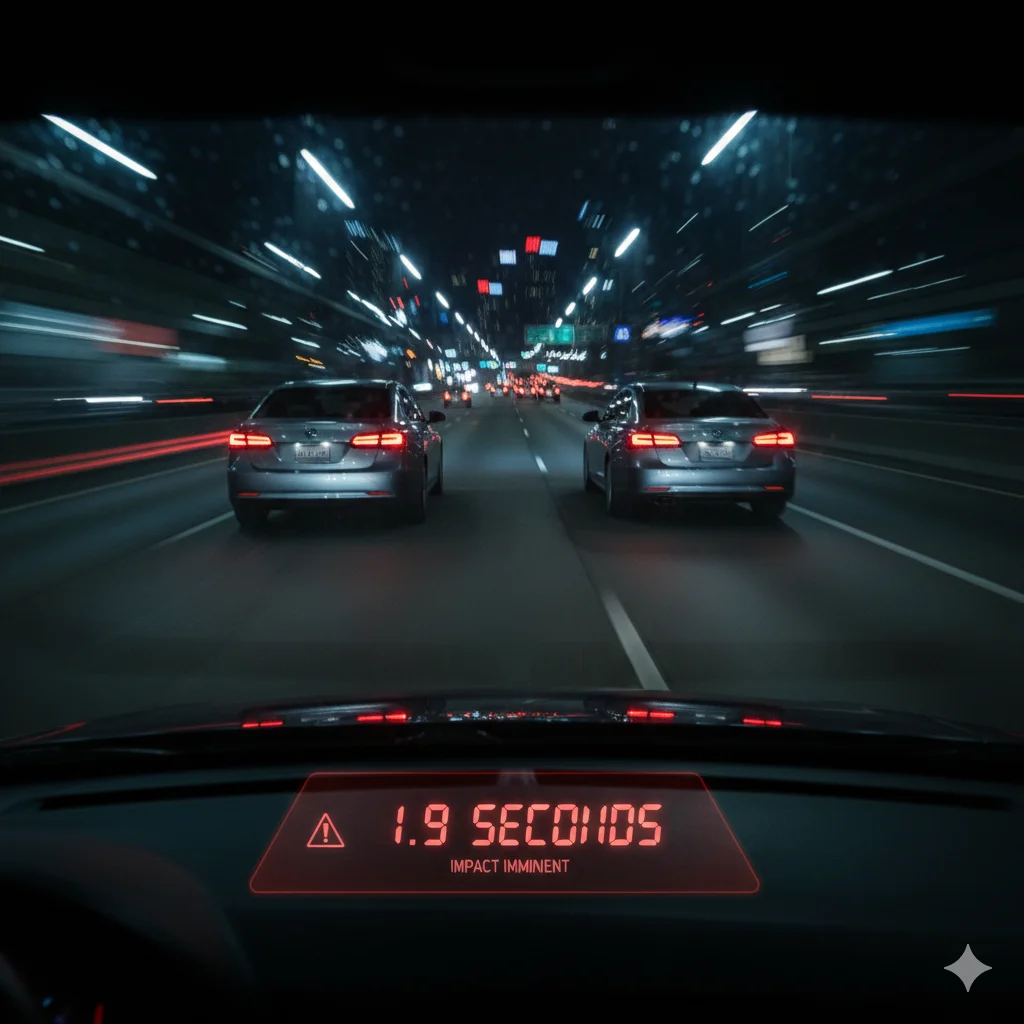
1.9 seconds to collision highway merge
TTC 1.9s · HIGH SPEED MERGE · 94% COLLISION PROBABILITY
🚨 CRITICAL INTERCEPTED

AV Decision: Accelerate to Merge

Collision trajectory sensors reported time-to-collision of 1.9 seconds with 94% probability. The navigation model predicted the lead vehicle would accelerate into the available gap and initiated a merge with acceleration. Trajectory physics calculated based on current vectors that the gap would not open in time. The model was 94% confident. We don't work with confidence — we work with physics. TTC under 2.0 seconds is an absolute critical threshold. VETO: emergency stop regardless of model confidence level.

VETO Collision trajectory · TTC 1.9s critical threshold · emergency stop · 100% certain
Intercepted in sub-1ms · Audit trail generated

SCALABILITY

No Fixed Ceiling.
Infinite Scenarios.

Traditional safety monitors run a finite ruleset — what the engineers wrote on the day they shipped. Our patent-pending architecture is purpose-built to scale. As your AV stack encounters new edge cases, new jurisdictions, new sensor configurations — our verification layer extends with it.

Simultaneous, Not Sequential

Every verification category fires against each decision in a single window. Complexity doesn't increase latency. Sub-millisecond whether there's one issue or twenty — the entire verification suite completes in one pass.

Scalable to Any Scenario

New jurisdiction. New sensor type. New vehicle class. New edge case your model encountered in the field last Tuesday. Our patent-pending architecture extends to cover it — without retraining, without model updates.

🔒

Any Single Veto Blocks

One violation out of any number of checks is enough to block the action. The threshold is absolute. The system doesn't average confidence scores — it applies deterministic rules, and one VETO is final.

📋

Forensic Readiness Infrastructure

Every verification — PASS or VETO — generates a cryptographically signed, hash-chained record before any incident happens. What was checked, what the result was, what sensor context was used, the exact timestamp. When NHTSA or an insurer asks why the vehicle acted, the investigation is already documented. ISO 26262 and SOTIF aligned.

COMPLIANCE

Built for the
Standards That Matter.

ISO 26262

Functional safety for road vehicles. Our verification architecture aligns with ASIL requirements for safety-critical automotive systems.

SOTIF (ISO 21448)

Safety of the Intended Functionality. Our independent verification layer directly addresses the SOTIF gap — scenarios where the model performs as designed but the outcome is unsafe.

NHTSA Vehicle Safety

Live NHTSA database integration verifies vehicle safety ratings and manufacturer specifications against claimed sensor and collision avoidance configurations.

Federal Emergency Vehicle Law

All-50-state emergency vehicle yield mandate enforced deterministically — regardless of how the navigation model classifies the approaching vehicle.

Physics Standards

Rollover limits, split-Mu traction physics, stopping distance calculations, and 2-second following distance rules applied from first principles — not learned heuristics.

Patent-Pending Architecture

Our verification engine is patent-pending. Purpose-built from the ground up for this exact problem — not adapted from general-purpose AI infrastructure.

INTEGRATION

Integrate in
Under an Hour.

One API call. Our proprietary, patent-pending architecture independently verifies the decision and returns the verdict — PASS or VETO, what failed, why, and a cryptographically signed audit trail — sub-millisecond. No model changes. No hardware swaps. Drop-in independent verification for any AV stack.

POST /v1/verify/autonomous — sub-1ms

THE DECISION

🚗

Accelerate · Merge Left

Navigation model decision

SPEED

71 mph / 55 limit

TIME TO COLLISION

1.9s

CONDITIONS

Heavy rain · Wet

HAZARDS

🚨 Emergency · 🚶 3 pedestrians

ROAD SURFACE

Split-μ — asphalt / gravel / asphalt / gravel

VERDICT

🛑

VETO

action: emergency_stop

sub-1ms

verification time

7 VIOLATIONS DETECTED

Speed limit Weather surface Following distance Collision trajectory Emergency vehicle Pedestrian crosswalk Split-μ stability
🔐

Audit trail cryptographically signed · confidence 1.0

01

Send the Decision

Your navigation stack generates a decision. One POST to our endpoint. Any language. Any platform. No changes to your model or infrastructure.

02

Verification Fires

Our proprietary, patent-pending verification architecture independently assesses the decision — physics, law, safety standards — simultaneously, in a single sub-millisecond window. Not through your model. Completely independent.

03

PASS or VETO

You receive a verdict sub-millisecond. PASS with audit trail, or VETO with exact reason, what failed, and corrective action. The actuator waits.

GET STARTED

Ready to Add a Safety Layer
That Doesn't Guess?

Contact us for AV integration access, a technical demo, or to discuss enterprise deployment. We work directly with AV engineering teams.

Patent-pending architecture  ·  ISO 26262 aligned  ·  SOTIF ready  ·  sub-millisecond  ·  100% deterministic