Industrial robotics AI verification
EARLY ACCESS

INDUSTRIAL ROBOTICS VERIFICATION

Before the Arm Moves.
Not After the Incident Report.

Your AI plans the motion. PrimeVitas verifies it — against force limits, payload ratings, path physics, and safety standards — before the actuator fires. Sub-millisecond. Every cycle. Whether you run 10 robots or 750,000.

sub-1msBefore actuation
100%Deterministic — same answer every cycle
0Changes to your robot stack
Motion scenarios verified

THE PROBLEM

Your Motion Planner
Cannot Verify Itself.

Modern robot operating systems are extraordinarily capable. Path planning, collision detection, workspace monitoring — all formalized at the software level, all executing at machine speed. But every motion planning system shares the structural limitation it cannot resolve from the inside:

"A safety layer built into the planner cannot independently verify the planner."

Your planner checks for collisions in the model — not against a binding ISO standard it doesn't hold. It executes the force profile it was configured with — it doesn't verify that profile against ISO/TS 15066 force limits for the specific body region a human worker just entered. It runs the payload your integrator programmed — it doesn't catch the accumulation that puts the end-of-arm tooling 15kg over rating when the AI picks a heavier part variant.

These aren't programming errors. They're structural gaps that require a fundamentally different system: proprietary, purpose-built, and running entirely outside your robot stack — with no shared state and no shared failure modes. PrimeVitas is that system. One API call. Every decision verified before the motor turns.
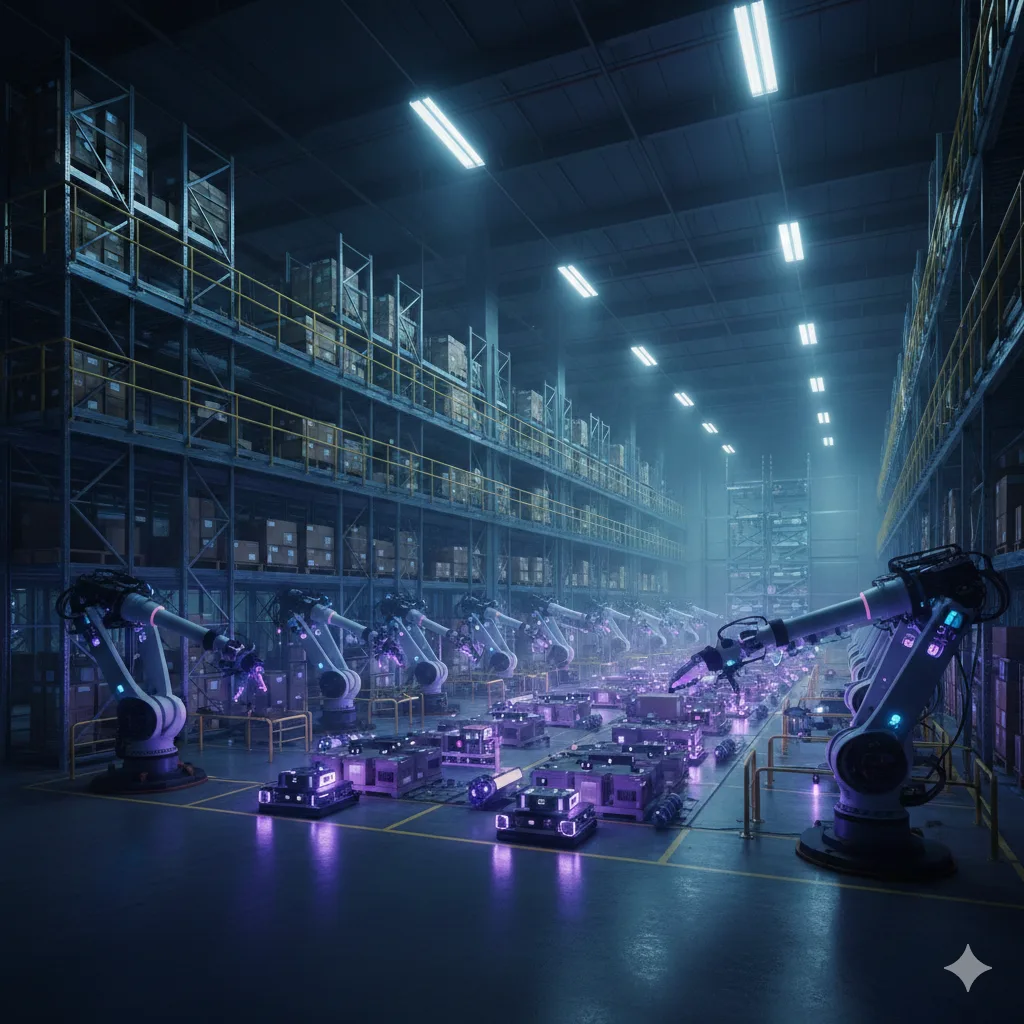
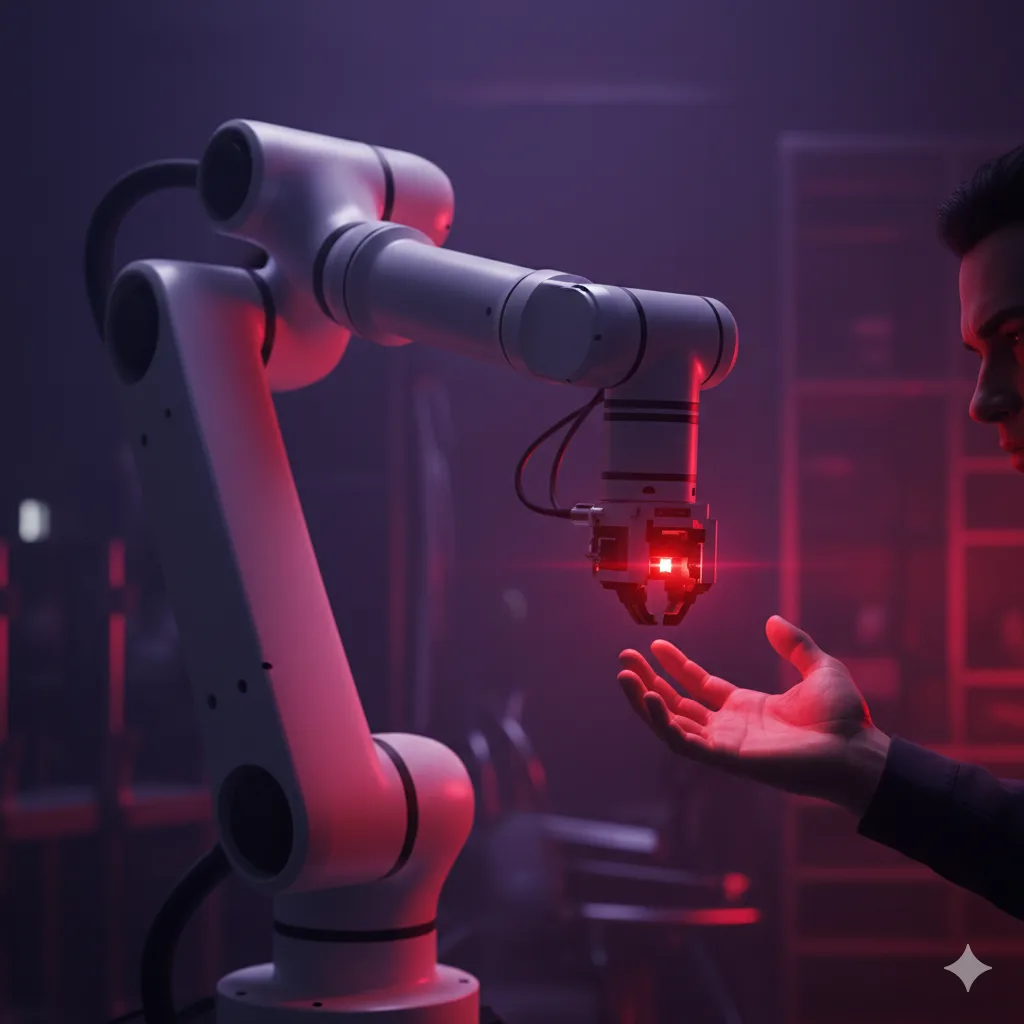
Collaborative robot arm
✓ PASS sub-1ms · ISO 10218 verified

When physics, force limits, payload ratings, and safety standards all clear — the motion executes sub-millisecond with a full cryptographic audit trail. Zero added cycle time. Zero friction.

THE SCALE PROBLEM

At Fleet Scale,
One Failure Mode Multiplies.

A single robot fleet operating with an unverified AI motion planner introduces the same failure mode at every node. One software update that misconfigures a force limit doesn't affect one robot — it affects every robot running that build, in every warehouse, on every shift.

That's the compounding risk of fleet-scale AI without an independent verification layer. Not one incident. A class of incidents, all sharing the same root cause.

"The failure mode that matters isn't the one your engineers designed for. It's the one the AI introduced after the engineers signed off."

PrimeVitas provides the independent external layer that catches that failure mode — deterministically, at the speed of actuation, across every robot in the fleet simultaneously.

WHY FLEET SCALE CHANGES EVERYTHING

750K+ Robots operating in a single large e-commerce fulfillment network — all running AI-generated motion plans, all sharing the same software stack
3M+ Collaborative robots (cobots) deployed globally in manufacturing — operating in direct proximity to human workers under ISO/TS 15066 force limits
$250K+ Average cost of a single industrial robot incident — including shutdown, OSHA investigation, workers' compensation, and lost production time

THE SCENARIOS

Four Failures No Motion
Planner Can Self-Detect.

These aren't hypotheticals. They're structural failure modes that occur when AI-generated motion plans execute without an independent verification layer — and the only signal is the incident report.

Collaborative robot arm near human worker
COLLABORATIVE WORKSPACE · HUMAN DETECTED · 0.4m SEPARATION
🚨 CRITICAL INTERCEPTED

AV Decision: Cobot Proceeds — Force Limit Exceeded

A collaborative robot operating in a shared workspace receives an AI-generated motion plan routing the arm through a zone where a human worker just entered. The planned velocity produces a contact force of 220N at the wrist. ISO/TS 15066 §5.4.3 specifies a maximum contact force of 80N for that body region. The motion planner passed the trajectory — it was checking for geometric collision, not force-limit compliance for the specific anatomy in the zone. PrimeVitas catches the ISO/TS 15066 violation before the motor fires.

VETO ISO/TS 15066 §5.4.3 · contact force 220N exceeds 80N limit · hold motion
Intercepted in sub-1ms · Audit trail generated
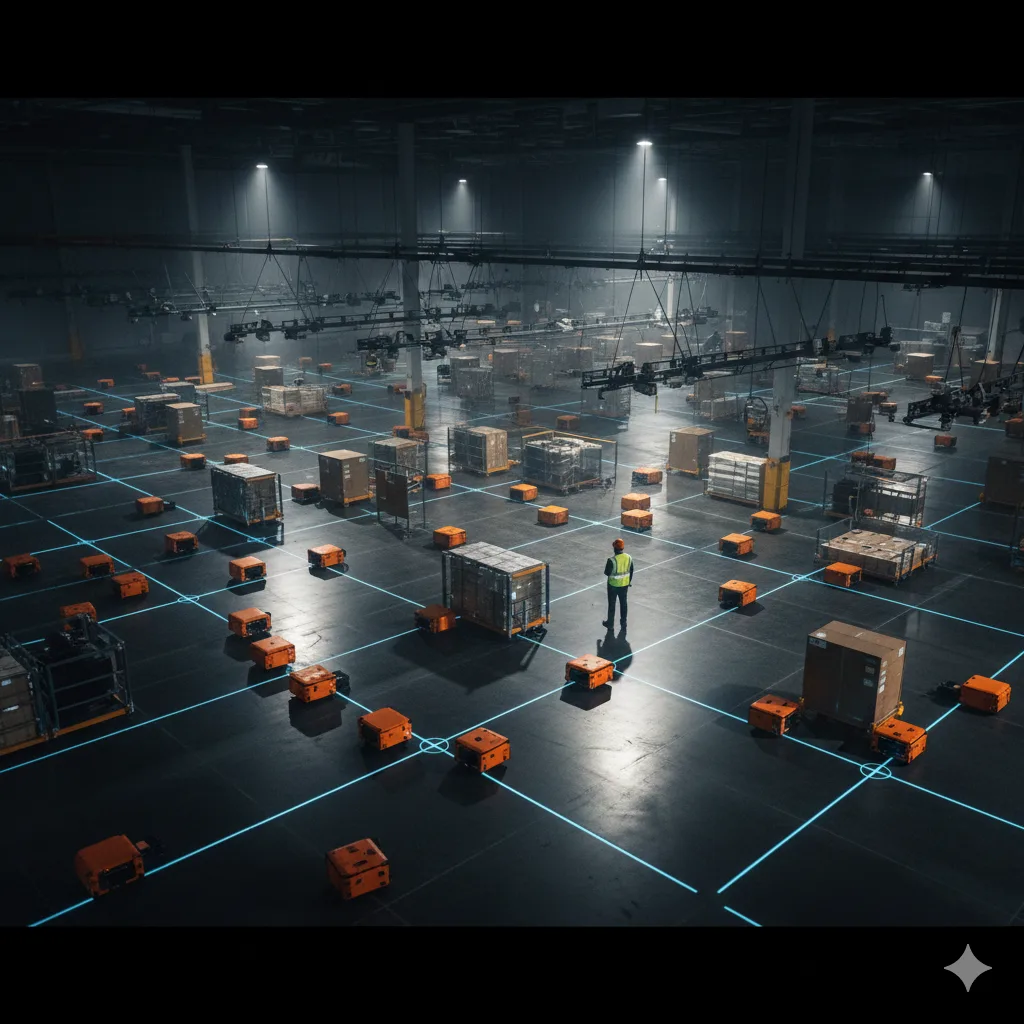
Warehouse autonomous robot fleet
FULFILLMENT WAREHOUSE · WORKER IN ZONE · PATH ACTIVE
🚨 CRITICAL INTERCEPTED

AI Path Plan Intersects Human Worker Zone

An autonomous mobile robot receives an AI-generated path plan routing through a dynamic work zone. A human worker entered the zone after the path was planned — within the planning latency window. The robot's onboard collision detection relies on the sensor data it had when the path was generated. PrimeVitas independently evaluates the current zone state and worker proximity at the moment of execution — not at the moment of planning. The path is vetoed before the robot moves.

VETO Human zone intersection · real-time state mismatch · path denied
Intercepted in sub-1ms · Audit trail generated
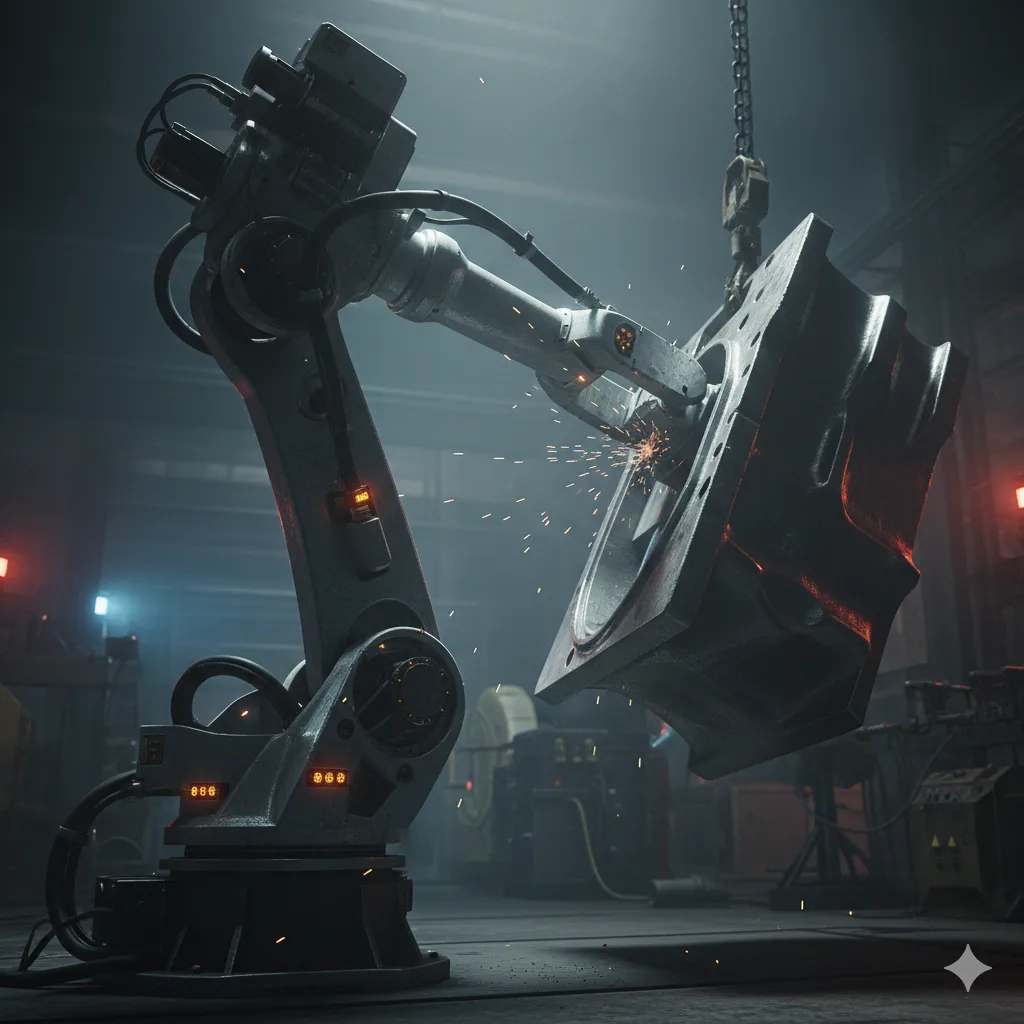
Industrial robot arm with heavy payload
PICK OPERATION · PAYLOAD 97kg · RATED LIMIT 80kg
⚠ DANGER INTERCEPTED

AI Pick Sequence Exceeds Rated Load Capacity

A robotic picking system receives an AI-generated pick sequence accumulating end-of-arm tooling plus part weight at 97kg. The arm is rated for 80kg. The AI optimized for throughput — the current tooling configuration wasn't in its planning context. At 21% over rating, the joint drive exceeds rated torque and the wrist assembly is at structural risk. PrimeVitas payload verification catches the accumulation error before the pick executes — not after the joint failure.

VETO Payload 97kg exceeds 80kg rating · joint torque overrun risk · pick denied
Intercepted in sub-1ms · Audit trail generated
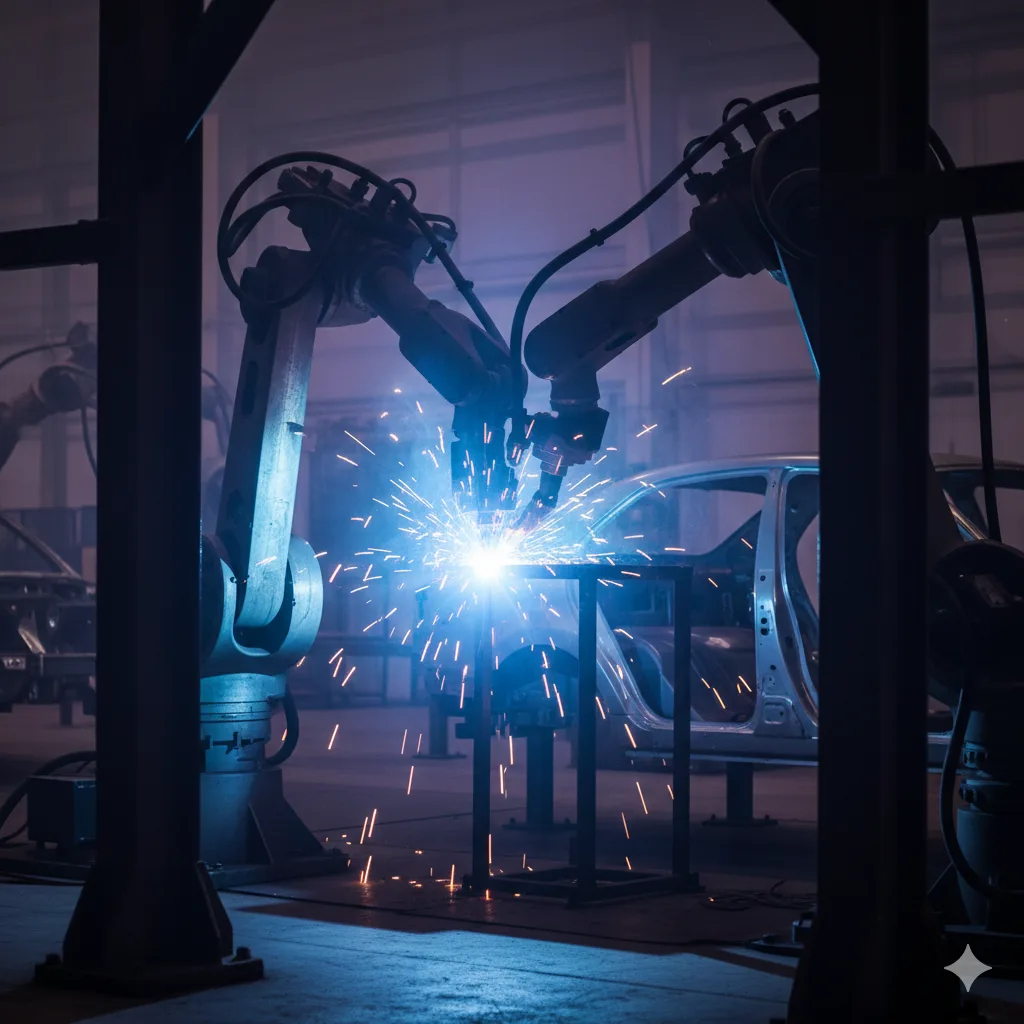
Welding robot automotive assembly
AUTOMOTIVE WELD · 1.8mm HSLA · WRONG PARAMETERS
⚠ DANGER INTERCEPTED

AI Welding Program Produces a Non-Conforming Weld

An automotive manufacturing robot receives an AI-generated welding program for a structural body panel. The AI selected wire feed speed and amperage from a similar prior job — the material is 1.8mm high-strength steel, but the parameters were calibrated for 1.2mm mild steel. The weld will appear visually sound and pass visual inspection. It will fail a destructive tensile test. PrimeVitas catches the material-to-parameter mismatch against AWS D1.1 before the weld cycle starts.

VETO Weld parameters · 1.2mm calibration on 1.8mm HSLA · AWS D1.1 · cycle denied
Intercepted in sub-1ms · Audit trail generated

WHAT WE VERIFY

Every Risk. Every Standard.
Before Every Cycle.

Our proprietary, patent-pending verification architecture independently assesses every AI-generated robot motion decision across every dimension of physical and regulatory safety — simultaneously, sub-millisecond, before the actuator fires.

🤖

Motion & Path Safety

Every AI-generated path plan independently verified against current workspace state — human zones, dynamic obstacles, and real-time sensor data at execution time, not planning time.

Collaborative Robot Force Limits

Contact force and pressure independently verified against ISO/TS 15066 body-region limits before every cobot motion in a shared human-robot workspace. Anatomy-specific thresholds applied deterministically.

⚖️

Payload & Load Ratings

End-of-arm tooling weight plus part weight independently verified against rated joint capacity — catching accumulation errors the AI planner didn't have in its context window.

Speed & Separation Monitoring

Robot velocity independently verified against ISO 10218 and ISO/TS 15066 speed limits for the current human separation distance — in real time, before every motion cycle.

🔥

Process Parameter Integrity

Welding, adhesive, torque, and assembly process parameters independently verified against material-specific specifications — AWS, AISC, and OEM standards — before the process executes.

🛡️

Safety Zone Compliance

Protective zone integrity independently verified before every high-speed motion cycle — detecting zone bypass attempts, sensor fault states, and AI-generated speed increases that violate safety zone requirements.

COMPLIANCE

Built for the Standards
Your Robots Must Meet.

Our proprietary, patent-pending verification architecture is purpose-built to the safety standards governing industrial robots, collaborative robots, and AI-driven manufacturing systems worldwide.

ISO 10218-1 / ISO 10218-2

Industrial robot safety requirements and robot system integration. Robot speed, force, power, and workspace requirements independently verified before every motion cycle.

ISO/TS 15066

Collaborative robot safety. Body-region-specific force and pressure limits for human-robot contact independently verified against current workspace occupancy — the standard cobots must meet, enforced deterministically.

ANSI/RIA R15.06

US industrial robot safety standard — speed, force, and protective stop requirements independently verified for US-deployed industrial robot systems and integrations.

IEC 62061 / ISO 13849

Functional safety of machinery. Safety Integrity Level (SIL) and Performance Level (PL) requirements — PrimeVitas provides the independent verification layer these standards require for AI-controlled systems.

AWS D1.1 / D1.5

Structural and bridge welding codes. AI-generated welding parameters independently verified against material, joint type, and service classification requirements before the weld cycle begins.

Patent-Pending Architecture

Our verification engine is proprietary and patent-pending. Purpose-built for AI-in-the-loop robotic systems — not adapted from general-purpose infrastructure.

INTEGRATION

One Call.
Every Motion Verified.

One API call. Our proprietary, patent-pending architecture independently verifies every AI-generated motion decision and returns the verdict — PASS or VETO, what failed, why, and a cryptographically signed audit trail — sub-millisecond. No stack changes. No cycle time impact.

LIVE VERIFICATION — COLLABORATIVE ROBOT MOTION DECISION POST /v1/robotics/verify

THE MOTION DECISION

🦾

Cobot Arm Extension · Zone B

AI-generated motion plan

VELOCITY 1.8 m/s
HUMAN DETECTED 0.4m separation
CONTACT FORCE (planned) 220N
PAYLOAD 14.2 kg
WORKSPACE MODE Collaborative

VERDICT

🛑

VETO

action: hold_motion

sub-1ms

verification time

VIOLATION 1

ISO/TS 15066 §5.4.3 — contact force 220N exceeds 80N limit for arm/elbow region in collaborative mode

VIOLATION 2

ISO 10218-2 — velocity 1.8 m/s at 0.4m separation exceeds speed/separation limit for occupied zone

🔐

Cryptographically signed  ·  confidence 1.0

01

Send the Decision

Your robot operating system or AI motion planner generates a decision. One POST to our endpoint. Any language. Any platform. Zero cycle time impact.

02

Verification Fires

Our proprietary, patent-pending architecture independently verifies the motion decision — force limits, payload, path safety, speed/separation, process parameters — simultaneously, in a single sub-millisecond window. Not through your stack. Completely independent.

03

PASS or VETO

You receive a verdict before the actuator fires. PASS with a signed audit trail, or VETO with the exact violation, what standard it breaches, and the corrective action. The motor waits.

GET STARTED

Ready to Put a Verification Layer
Between Your AI and Your Fleet?

Request early access to the robotics verification API, a technical demo, or to discuss enterprise deployment for your robot fleet.

Proprietary patent-pending architecture  ·  ISO 10218  ·  ISO/TS 15066  ·  ANSI/RIA R15.06  ·  Sub-millisecond  ·  100% deterministic